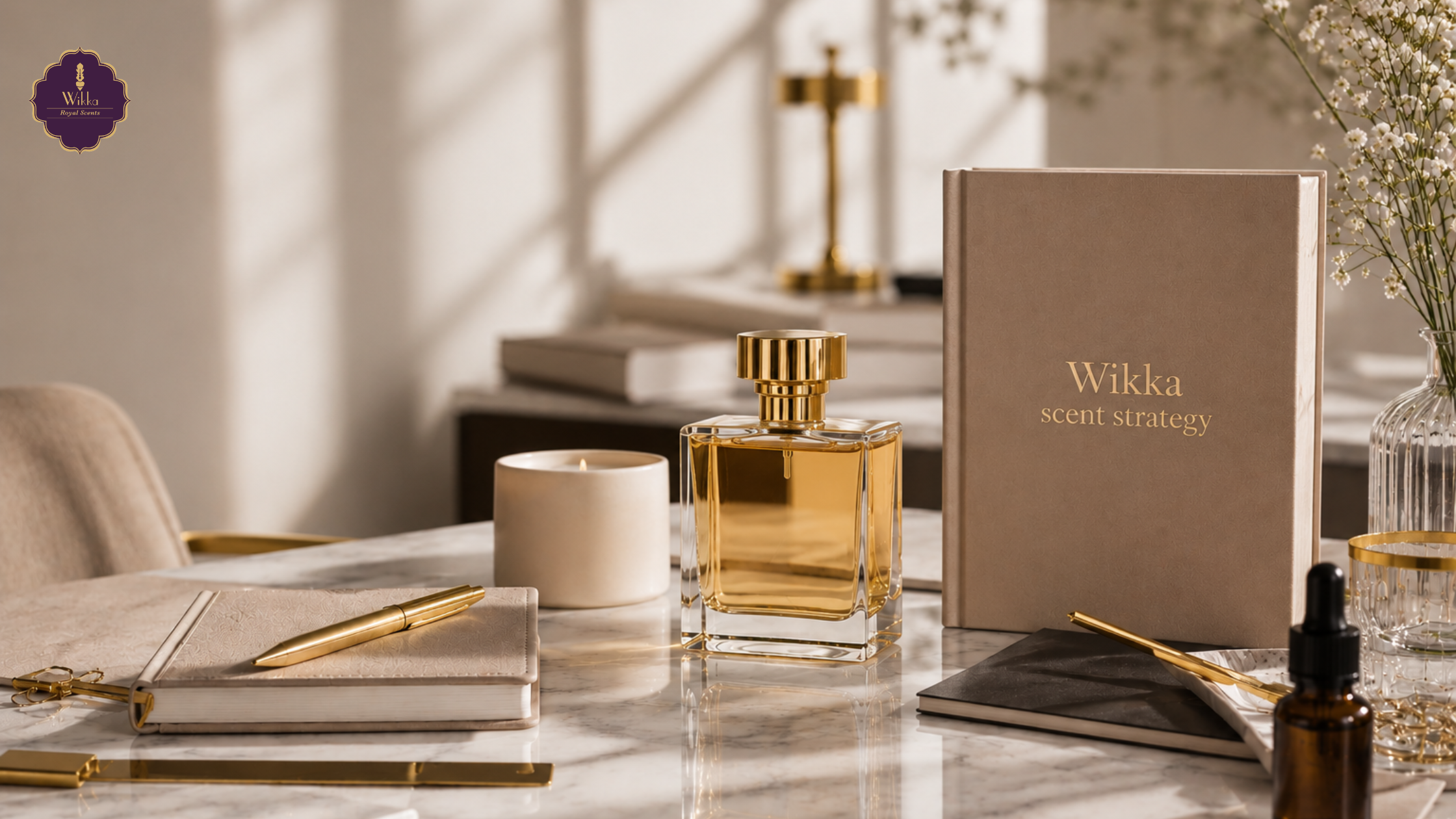
A logo can make a brand instantly recognizable. A color palette can establish its visual character. Typography can communicate whether a brand feels contemporary, traditional, playful, or luxurious.
But there is another dimension of brand identity that is often overlooked: scent.
Envision entering a high-end hotel and being welcomed by a distinctive fragrance. Months later, you encounter the same scent somewhere else, and immediately, you are reminded of that hotel, the lobby, the atmosphere, the feeling of being welcomed.
That is the power of scent.
For brands that invest heavily in creating memorable customer experiences, olfactory branding offers an opportunity to build recognition through one of our most evocative senses.
What Is Olfactory Branding?
Olfactory branding is the strategic use of fragrance as part of a brand’s identity and customer experience.
Just as a brand may have a visual identity, it can develop an olfactory identity: a carefully considered scent profile that reflects its personality, environment, and positioning.
The aim is not simply to make a space smell pleasant. It is to create a sensory association that feels relevant to the brand.
A high-end resort, for example, may want an atmosphere that feels serene, refined, and distinctive. A contemporary fashion store may prefer something modern, sophisticated, and energetic. A wellness destination might choose aromatic notes that complement a sense of calm and natural connection.
The fragrance becomes another expression of the brand.
Why Does Scent Matter to Brands?
Much of branding is designed to be seen. Logos, packaging, architecture, advertising, and digital content all compete for visual attention.
Scent works differently.
Our sense of smell is closely connected with the brain involved in emotion and memory. This helps explain why a particular fragrance can suddenly bring back a childhood memory, remind us of a particular person, or transport us to a place we have visited before.
For businesses, this creates an interesting possibility: fragrance can become part of the memory customers form of a physical space.
A customer may not consciously think, “This brand has an excellent olfactory identity.” Instead, the experience can become part of how the place is perceived and remembered. This is where thoughtful scent branding becomes more than simply adding fragrance to a room.
Your Brand Has a Personality. What Should It Smell Like?
Every strong brand communicates a personality.
Think about the qualities you want customers to associate with your business:
- Sophisticated
- Natural
- Contemporary
- Warm
- Energetic
- Serene
- Exclusive
- Creative
- Refined
- Inviting
Your fragrance should support those associations rather than compete with them.
This is why choosing a scent should not begin with, “Which fragrance smells the nicest?”
A better question is: “What should our customers feel when they experience our brand?”
A fragrance that is beautiful in isolation may not necessarily be right for a particular brand. The right scent complements the brand’s character, environment, audience, and customer journey.
What Is a Signature Brand Scent?
A signature brand scent is a distinctive fragrance created or selected to represent a brand and become associated with its identity.
It can be used across carefully chosen touchpoints, such as hotels, retail stores, offices, spas, showrooms, or other customer-facing environments, to create greater sensory consistency.
The idea is similar to having a signature visual language.
A brand does not randomly change its logo every few months. Its visual identity is deliberately developed so that customers can recognize it and associate it with the brand.
A signature fragrance can work on a similar principle. Over time, consistent exposure may help customers associate a particular aromatic profile with a specific place or experience.
How Is a Signature Brand Scent Created?
Creating a brand fragrance is not simply a matter of choosing a popular perfume. It begins with understanding the brand.
- Define the brand personality: The first step is to understand what the brand represents. Is it luxurious or understated? Natural or urban? Warm or minimalist? Traditional or progressive? These characteristics provide the foundation for the fragrance direction.
- Understand the audience: The fragrance should also be appropriate for the people experiencing it. A fragrance intended for a luxury hospitality environment may require a very different approach from one designed for a corporate or retail environment. Understanding the audience, cultural context, and setting is therefore essential.
- Build the fragrance profile: Perfumers can experiment with different scent families and ingredients to craft a blend that embodies the desired identity. For instance, citrus notes can bring a sense of brightness; light florals can add softness. Earthy/Woody notes can create warmth and depth, while aromatic or green notes may reinforce a feeling of freshness. The final composition reflects the interplay among the elements, resulting in an outcome that aligns with the brand identity.
- Consider the environment: A fragrance blend that works well in a small boutique may not have similar influence in a large hotel lobby. Factors like space, ventilation, temperature, footfall, and the duration of customer exposure can influence the fragrance experience, which is why many factors come into consideration while designing a fragrance for a brand.
- Create consistency: After determining the fragrance direction, maintaining consistency is essential. The goal is to develop a distinctive sensory language that doesn’t overpower the space. A thoughtfully crafted scent experience should seamlessly blend into the surroundings rather than feeling like an extra addition to it.
Scent Branding Is About More Than Making a Space Smell Good
This distinction is important. Scent branding is not simply air freshening. Air freshening generally addresses an environmental need: neutralizing or masking unwanted odors.
Brand fragrance has a different purpose.
It considers questions such as:
- What does this brand stand for?
- What kind of experience does it want to create?
- What emotional atmosphere should customers encounter?
- How can fragrance complement the visual and physical environment?
The difference lies in intention. A branded fragrance is designed as part of the overall customer experience.
Can Scent Really Make a Brand More Memorable?
Scent should not be seen as a quick fix for brand recognition. A scent alone cannot make up for a bad customer experience, inconsistent brand messaging, or a vague brand proposition. However, it can enhance an experience that already has meaning by providing an additional sensory dimension.
When visual, auditory, tactile, and olfactory elements work together coherently, the result can feel more immersive and distinctive.
This is particularly relevant as brands move from simply selling products to creating experiences. Customers don’t experience a brand through a logo alone. They experience it through the environment they enter, the service they receive, the materials they touch, the sounds they hear, and sometimes, the fragrance in the air.
The Future of Brand Identity May Be Multi-Sensory
For decades, brand identity has largely been visual. Today, businesses are increasingly thinking beyond the logo. A hotel has an architectural identity. A store has an interior language. A hospitality brand has a tone of service. A digital brand has a distinctive interface and soundscape.
Now, the power of scent has become another part of this ecosystem.
The question is no longer simply: “Does our brand look distinctive?”
It is also: “Does our brand feel distinctive?”
And eventually: “Would our customers recognize us even with their eyes closed?” That is where the real potential of olfactory branding lies.
Your Brand Has a Logo. Perhaps It Is Time It Had a Scent.
A powerful brand is built through associations. A logo creates visual recognition. A distinctive color creates familiarity. A carefully designed space creates atmosphere.
A signature brand scent can add another layer, one that exists beyond the visual identity and becomes part of the experience itself.
The goal isn’t to create the strongest fragrance in the room. It is to create the right fragrance for the brand.
Because when fragrance is thoughtfully designed, it stops being merely a smell. It becomes part of the story your brand tells.