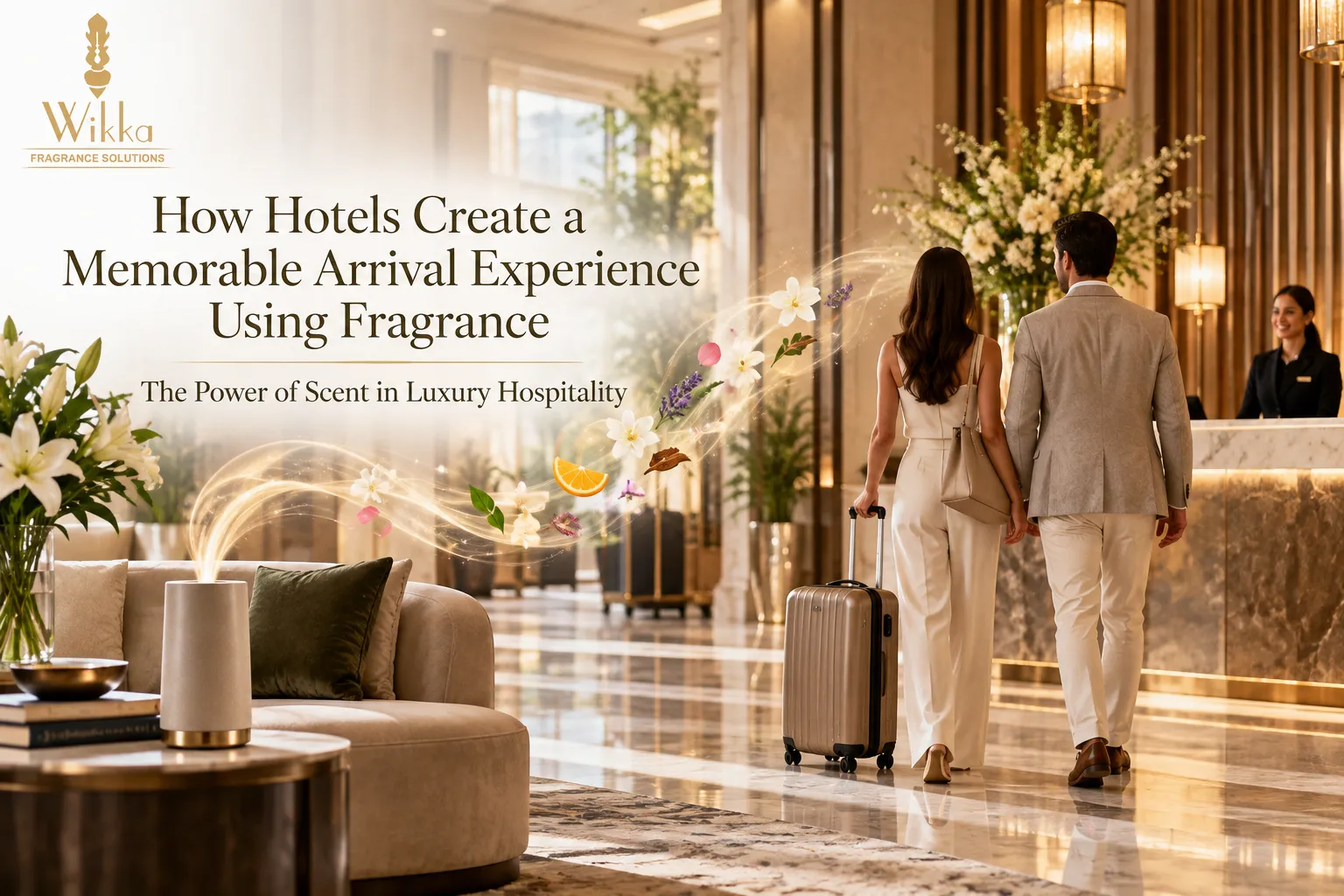
As the glass doors slide open and you step inside, there’s an instant feeling of ease and calm. After the bustle of the street outside, walking into a hotel lobby feels like a haven. Soft lighting reflecting off of polished stone, quiet music hums in the background and a subtle fragrance in the air. Sometimes, a delicate blend of citrus and soft florals, or warm woods, lingers gently, almost like a silent welcome.
You may not consciously notice it, yet that scent becomes part of your memory of the place. Days, months, or even years later, catching a similar fragrance somewhere else might instantly transport you back to that very lobby, the feeling of arrival, comfort, and quiet luxury.
This is the silent influence of hotel scent marketing. More hotels today are recognizing the powerful role fragrance plays in shaping how guests feel from the very first moment they enter. By understanding how hotels use fragrance to enhance guest experience, hospitality brands are creating spaces that feel welcoming, memorable, and emotionally engaging.
For premium hospitality spaces, this approach goes even further through scent branding for luxury hotels. Carefully crafted fragrances become part of the hotel’s identity, creating a sensory signature that guests associate with the brand long after their stay ends.
Why First Impressions Matter in Hospitality
Hospitality is built on experience. Within the first few seconds of entering a hotel, guests subconsciously evaluate the environment and form an emotional response.
A carefully chosen fragrance can immediately make a space feel:
- Warm and welcoming
- Luxurious and refined
- Calm and relaxing
- Fresh and energizing
Unlike visual elements that guests actively observe, scent works on a deeper psychological level. Research in sensory psychology shows that smell is strongly connected to memory and emotion. This means a pleasant scent experienced upon arrival can stay associated with the hotel long after the guest has checked out.
This powerful connection is exactly why hotel scent marketing has become a key strategy in modern hospitality design.
How Hotels Use Fragrance to Enhance Guest Experience
When thoughtfully implemented, fragrance can shape how guests feel the moment they step inside the property. Understanding how hotels use fragrance to enhance guest experience reveals why scent has become an essential part of hospitality branding.
Creating a Sense of Welcome
A soft, inviting aroma in the lobby immediately signals comfort and care. Warm notes such as sandalwood, soft florals, or gentle citrus blends can create an atmosphere that feels both relaxing and sophisticated.
Guests may not consciously identify the scent, but they instantly feel that the space is thoughtfully curated.
Setting the Mood of the Property
Fragrance can subtly communicate the personality of a hotel.
For example:
- Citrus and herbal notes can create an energizing environment in urban business hotels.
- Floral and woody accords can evoke elegance in boutique or heritage properties.
- Soft lavender or chamomile blends can promote relaxation in wellness resorts and spas.
Through scent, hotels can guide how guests emotionally interpret the space.
Enhancing Emotional Memory
The olfactory system is closely connected to the brain’s limbic system, which processes memory and emotion. Because of this connection, scent becomes one of the strongest triggers of recollection.
Guests may forget the exact décor of a lobby, but the fragrance they experienced upon arrival often remains in their memory. This emotional association encourages guests to return and even recommend the hotel to others.
The Rise of Hotel Scent Marketing
In the past decade, hotel scent marketing has evolved from a subtle enhancement to a powerful branding strategy.
Hospitality brands in the contemporary market have started to intentionally curate fragrance experiences that align with their identity. They achieve this by using carefully designed scent profiles diffused in key spaces such as:
- Lobby entrances
- Reception areas
- Hallways
- Spa and wellness zones
When guests experience the same scent across different areas of the property, they start associating the fragrance with the hotel’s brand identity.
As time goes by, this consistent olfactory signature enhances guest recognition and loyalty.
Scent Branding for Luxury Hotels
For high-end hospitality brands, fragrance goes beyond creating an ambience; it represents their identity. This is where scent branding for luxury hotels becomes significant.
Luxury properties often curate bespoke signature fragrances that embody their narrative, location, and core principles.
For example:
- A seaside resort might feature notes of marine, citrus, and light woods.
- An ancestral palace hotel might incorporate rose, sandalwood, and amber accords that draw inspiration from classic perfumery.
- A wellness retreat may use soothing essential oils like rose, lavender, and lemongrass.
Through scent branding for luxury hotels, the fragrance becomes a sensory signature that guests begin to associate exclusively with the property.
Choosing the Right Fragrance for Hotel Spaces
Selecting the right scent is crucial for creating a memorable arrival experience. A hotel fragrance should be:
Subtle and refined – Overpowering scents can feel intrusive rather than welcoming.
Aligned with the brand identity – The fragrance should reflect the hotel’s positioning, whether modern, heritage, wellness-focused, or luxury.
Consistent across key areas – Consistency helps reinforce the sensory identity of the hotel.
Pleasant for a diverse audience – Since hotels serve international guests, balanced scent profiles often work best.
Hotel spaces are increasingly relying on natural aromas and essential oil blends as they create a sophisticated yet authentic atmosphere.
Fragrance as a Competitive Advantage in Hospitality
In today’s competitive hospitality landscape, small details can make a significant difference. While décor and service remain essential, sensory elements such as fragrance are becoming powerful differentiators.
Studies reveal that hotels that are investing in hotel scent marketing have been able to create a more immersive and emotionally engaging spaces for guests. A well-designed fragrance experience can set the tone of the stay, and it’s a win-win for guests as they leave with a lasting memory.
By understanding how hotels use fragrance to enhance guest experience, hospitality brands can transform an ordinary lobby into a memorable sensory journey.
The Lasting Power of a Signature Scent
A memorable arrival experience does not happen by accident—it is intentionally designed. Fragrance plays a unique role in this process because it connects directly with emotion, memory, and perception.
Through thoughtful hotel scent marketing and carefully crafted scent branding for luxury hotels, hospitality brands can create spaces that guests not only admire but truly feel.
Long after the stay ends, a familiar fragrance can instantly bring back memories of comfort, elegance, and hospitality. And that is the true power of scent in the world of luxury hotels.