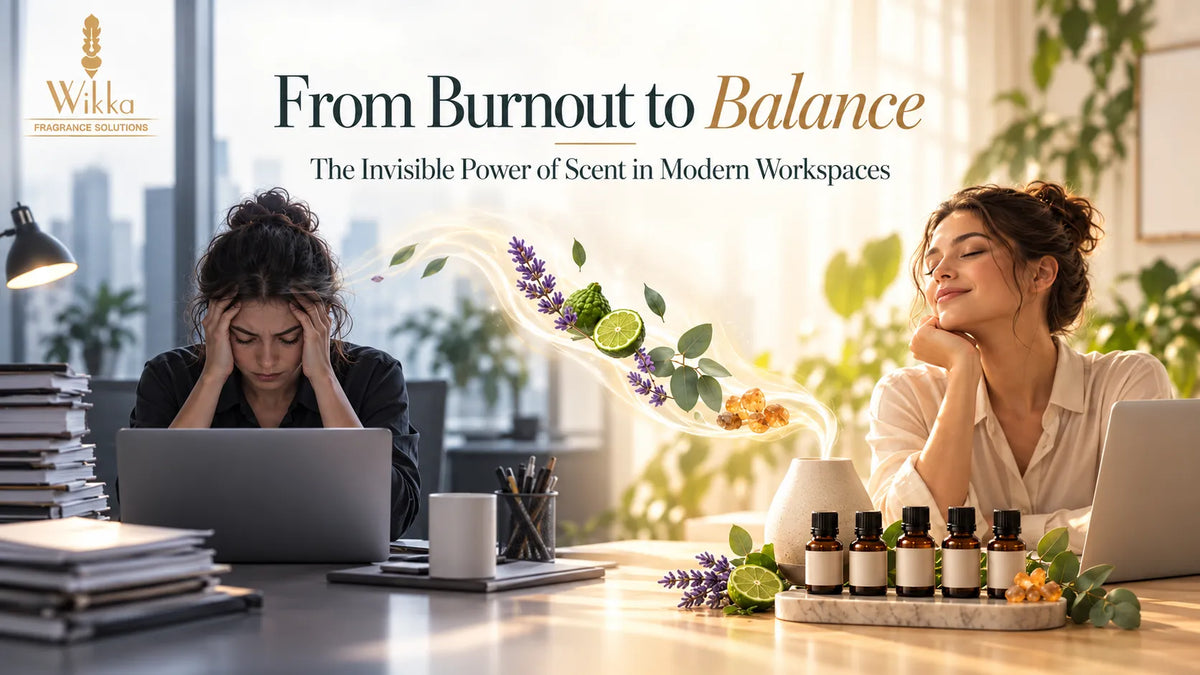
Business fragrance can change the way people experience your brand, often before they even engage with your products, services or the team. A carefully selected scent can transform a hotel into a welcoming haven, give a retail store a unique identity, and infuse elegance into any commercial space.
As brands continue to invest in visual identity and customer service, the power of scent opens a new avenue to making a lasting impact. It can help enhance your brand presence, shape how a space feels, and help customers with brand recall and recognition.
The opportunity lies in choosing a fragrance that feels authentic to your brand.
Why Business Fragrance Matters in a Business Environment?
Fragrance adds an emotional layer to this experience. While a fresh citrus aroma may feel lively and energizing, soft woody notes, on the other hand, can create a sense of warmth and sophistication. Floral notes may suit a space designed around relaxation, depending on their intensity and composition. When the fragrance aligns with the brand's identity, it can help create a more cohesive experience.
Scent is also closely connected to memory, emotion and decision making. A distinctive fragrance may help customers recall a place or experience, although the effect varies with personal preferences and context. For businesses, this creates an opportunity to build a sensory identity that extends beyond logos and visual design.
How Different Businesses Can Use Fragrance
Although there is no universal business fragrance that works for every commercial setting, the choice should reflect what the business wants people to experience.
Business Fragrance for Hospitality
Hotels have a unique opportunity to establish a distinctive ambiance from the moment visitors arrive. A luxury establishment might opt for a more elegant, subtle scent in its lobby, while a wellness resort could prefer gentler botanical fragrances. Occasionally, the same aroma can be maintained in specific guest-accessible areas to ensure a consistent experience, as long as its strength is modified to fit each environment.
Business Fragrance for Retail Stores
Retail spaces compete for attention through various visual merchandising, unique product presentations, engaging customer interactions. While scents can silently elevate these spaces without the need for visual elements. For instance, an upscale boutique may go for warm, sophisticated notes, while a lifestyle shop may opt for fresh aromas that align with their unique identity.
Business Fragrance for Offices and Corporate Spaces
An office fragrance needs a different approach. Employees spend extended periods in the same environment, and visitors may have varying sensitivities to scented products.
Here low-intensity fragrances may be the suitable choice for selected reception areas or shared spaces. It’s also essential to prioritize good ventilation, employee comfort, and accessibility.
Business Fragrance for Spas and Wellness Centers
Spas and wellness centers often build their experience around calm, comfort, and personal care. Soft herbal, floral, or woody notes can complement this atmosphere when used appropriately.
The fragrance should remain consistent with the services offered and should never substitute for proper ventilation, hygiene, or other elements of a comfortable environment.
How to Choose the Right Business Fragrance
Consider these five factors before making a decision.
(i) Brand personality: Decide whether the brand should feel modern, natural, luxurious, energetic, calming, or understated. The fragrance should support that impression.
(ii) Space and intention: A spacious hotel lobby has distinct needs compared to a small consultation room. Take into account the dimensions of the space, airflow, the number of visitors, and the average duration that people usually stay in that area.
(iii) Fragrance profile: Different scents create different impressions. Experiment, research well before choosing the one. The key is to pick a fragrance that feels right for the brand and the vibe you want to create.
(iv) Intensity and comfort: A fragrance should be noticeable without taking over the space. Start with a subtle scent and adjust it based on how the fragrance feels in the environment and how comfortable people are around it.
(v) Consistency: To help customers link a specific scent with your brand, it's important to maintain consistency. Using the fragrance thoughtfully across relevant spaces can create a familiar experience and enhance brand recall.
What Is Scent Marketing, and How Is It Different from Business Fragrance?
Business fragrance and scent marketing are closely related, but they are not the same.
Business fragrance refers to the fragrance used within a commercial environment. Scent marketing is a broader strategy that uses scent to support brand recognition, the customer experience, and marketing objectives.
For example, a hotel may use a pleasant fragrance simply to make its reception area more inviting. If that fragrance is developed into a recognizable signature scent and incorporated into the hotel's wider brand experience, it becomes part of a more deliberate scent marketing strategy.
This distinction matters because a successful fragrance program begins with the business objective, not the fragrance itself.
What Is a Business Signature Scent?
A business signature scent is a distinctive fragrance developed or selected to represent a brand. Similar to a visual identity or a recognizable sound, it can become one of the sensory elements associated with the business.
A signature scent might be used in a hotel lobby, a retail environment, selected customer-facing spaces, or even branded products and gifting experiences. Some businesses also explore extending the fragrance into take-home formats, allowing customers to experience the scent beyond the physical location.
The key is distinctiveness without excess. A signature scent should be recognizable in character, appropriate to the setting, and comfortable for the people experiencing it.
Choosing the Right Fragrance Solution for Your Business
The delivery system matters as much as the fragrance itself. The right fragrance solution depends on the space, desired coverage, operating hours, ventilation, and maintenance requirements.
Professional scenting systems may include standalone diffusers, HVAC-integrated systems, or other commercial fragrance dispensers. Standalone units can suit selected rooms or reception areas, while larger commercial environments may require a more carefully planned distribution system.
Avoid positioning fragrance sources where the scent could become concentrated around desks, seating areas, or air intakes. Always follow the manufacturer's instructions and relevant safety guidance.
Common Business Fragrance Mistakes to Avoid
- Choosing intensity over suitability: Stronger fragrance does not automatically create a more luxurious atmosphere.
- Using the same scent everywhere: Different spaces have different functional and sensory requirements.
- Ignoring employee and customer comfort: Some people are sensitive to fragrances. Consider feedback and provide fragrance-free options where appropriate.
- Overlooking ventilation: Fragrance should never be used to mask poor air quality, inadequate cleaning, or unpleasant odors caused by an underlying problem.
- Changing scents too often: Frequently switching the scent can disrupt brand identity if the goal is to establish a consistent and recognizable fragrance.
A thoughtful approach focuses on suitability, comfort, and a clear purpose rather than fragrance intensity.
Frequently Asked Questions (FAQs)
- What is the best business fragrance?
There is no single best business fragrance. It typically depends on the business type, brand identity, size of the space, ventilation, and the preferences and sensitivities of the people using it.
- How can a business fragrance improve customer experience?
A suitable fragrance can contribute to a welcoming atmosphere and strengthen the overall sensory impression of a space. A distinctive scent may also help customers associate a particular experience with a brand, although the outcome varies by person and setting.
- What is the difference between a business fragrance and a signature scent?
A business fragrance is any fragrance used in a commercial setting. A signature scent is a distinctive fragrance intentionally associated with a particular brand.
- Which fragrance notes work best for offices?
Some of the popular notes for office spaces are fresh citrus, green, and subtle woody notes, helping create an atmosphere that radiates freshness, balance and professionalism. The key is selecting a scent that complements the workplace while maintaining a balanced intensity.
The Lasting Impression of an Invisible Detail
A brand is often experienced through so many details, some are obvious and others almost imperceptible. Fragrance belongs to the latter category, yet it can contribute meaningfully to how a space feels and how people remember their time there.
In business fragrance, the opportunity lies in treating scent as an overall experience rather than an afterthought. When the fragrance is well suited to the environment, aligns with the people in it, also echoes the brand's personality, it can silently turn into a distinctive part of the way the business is experienced.